Website re-design
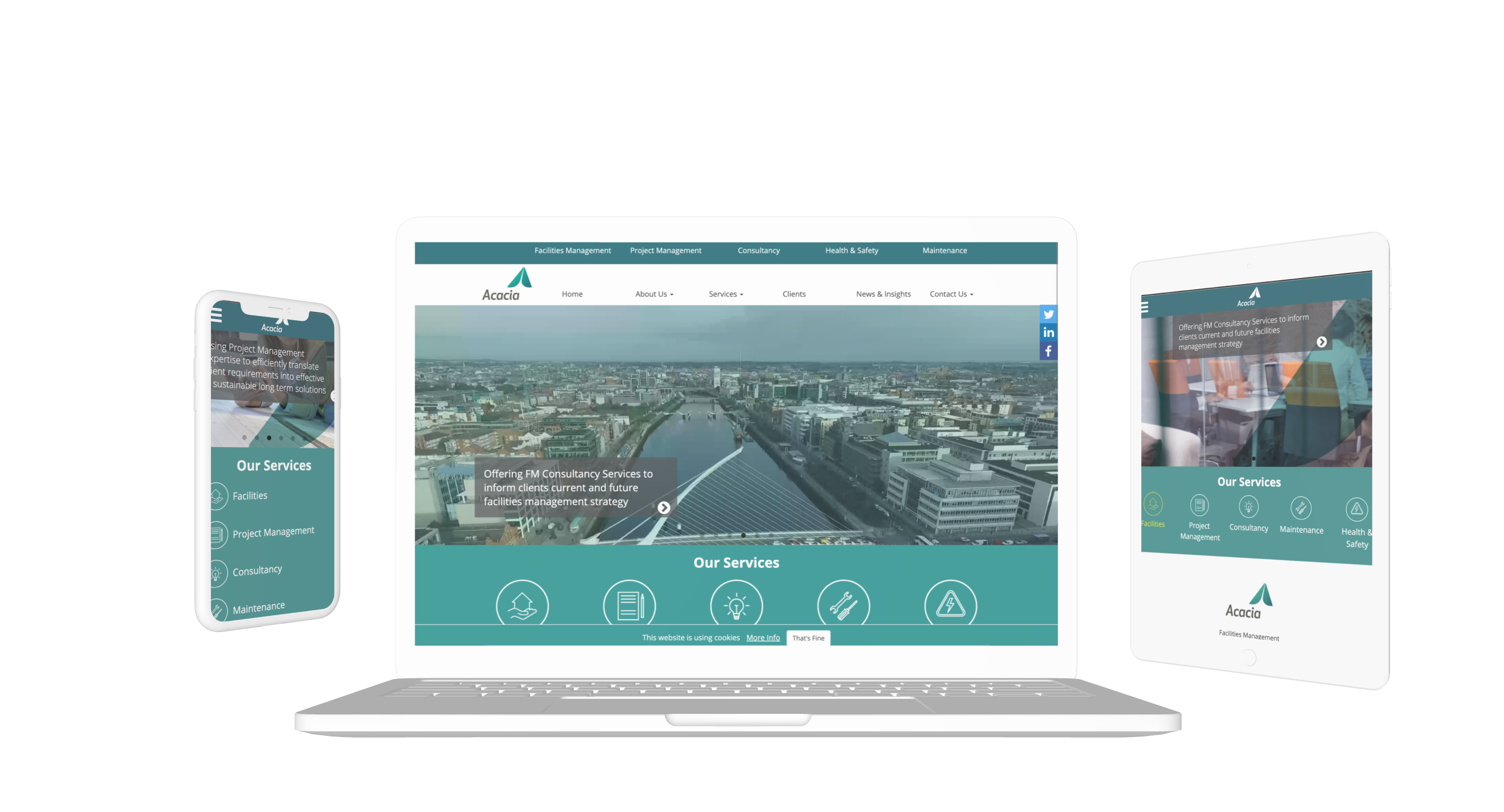
This project was a complete redesign of the Acacia Facilities Management website, focusing on improving user experience and aligning with stakeholder goals. Through detailed discovery sessions, key pain points were identified, including hidden services, the need for high-profile client visibility, and better SEO. A content-first, mobile-first approach was used, aimed at long sales cycle personas.
the challenge
Bringing two applications together while maintaining feature parity. Ensuring that the design is in line with the target persona’s expectations and abilities, ensuring that pattern and layout deviations aren’t too extreme.
the Objective
Improve adoption, satisfaction and perceived value for new CXM users, and existing CRM/MA users with a move to CXM.
the solution
Research and design new experiences for both the workflow automation tool and engagement score management.
Research
I used three sources for research purposes, anonymous usage data from the current Acacia website, this is data from Google Analytics, stakeholder interviews with the executive level leaders within the company alongside competitor research focusing on the facilities management space.
Competitor research
The competitor research was carried out to identify the way in which other FM Companies were utilizing their webiste to communicate the large number of services delivered by a Total FM company (Hard & Soft services).
CBRE
Web Design:
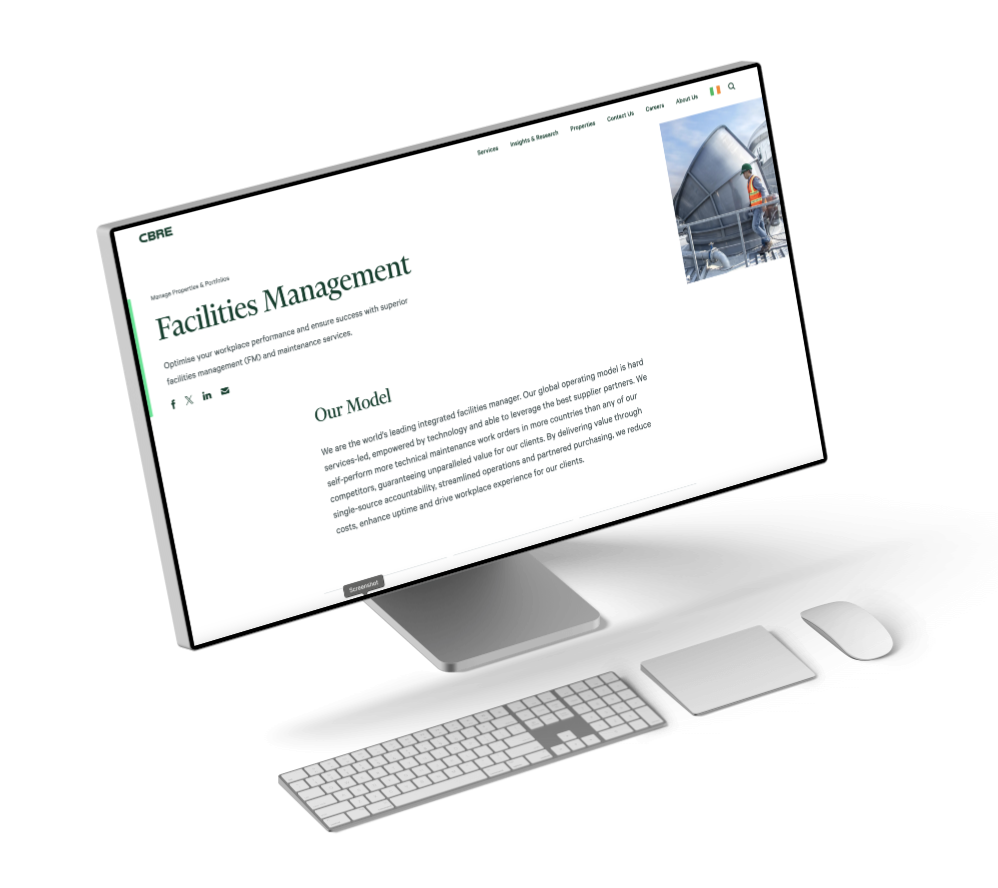
- Modern and clean design: The CBRE site uses a minimalistic, corporate design with ample white space, reinforcing a professional and global brand image.
- Visual hierarchy: Clear use of large headlines, subheadings, and brief copy ensures content is easy to scan. Service categories are divided cleanly, making navigation straightforward.
- Imagery: The site uses high-quality, professional images, but these feel more abstract and impersonal. Visual elements like icons are scarce.
- Mobile-responsiveness: Fully optimized for mobile devices, maintaining readability and clarity across devices.
Tone & Messaging:
- Professional and authoritative: The tone is formal and factual, focusing heavily on CBRE’s global expertise and industry leadership. The messaging is client-focused, highlighting reliability and expertise.
- Trust-building: The site emphasizes scale, showcasing CBRE’s extensive experience managing properties worldwide. However, it’s somewhat impersonal due to the corporate tone.
Information Architecture:
- Service segmentation: The website clearly segments services into specific categories. However, deeper services are sometimes nested under drop-down menus, requiring users to explore several layers.
- Call to action (CTA): Clear CTAs such as “Contact Us” and “Learn More” guide users toward conversion points, but they lack urgency and personalization.
- Ease of navigation: The site’s top navigation and service dropdowns provide clear paths to various service offerings, though it can take a few clicks to access more detailed content.
Sensori FM
Web Design:
- Modern and clean design: The CBRE site uses a minimalistic, corporate design with ample white space, reinforcing a professional and global brand image.
- Visual hierarchy: Clear use of large headlines, subheadings, and brief copy ensures content is easy to scan. Service categories are divided cleanly, making navigation straightforward.
- Imagery: The site uses high-quality, professional images, but these feel more abstract and impersonal. Visual elements like icons are scarce.
- Mobile-responsiveness: Fully optimized for mobile devices, maintaining readability and clarity across devices.
Tone & Messaging:
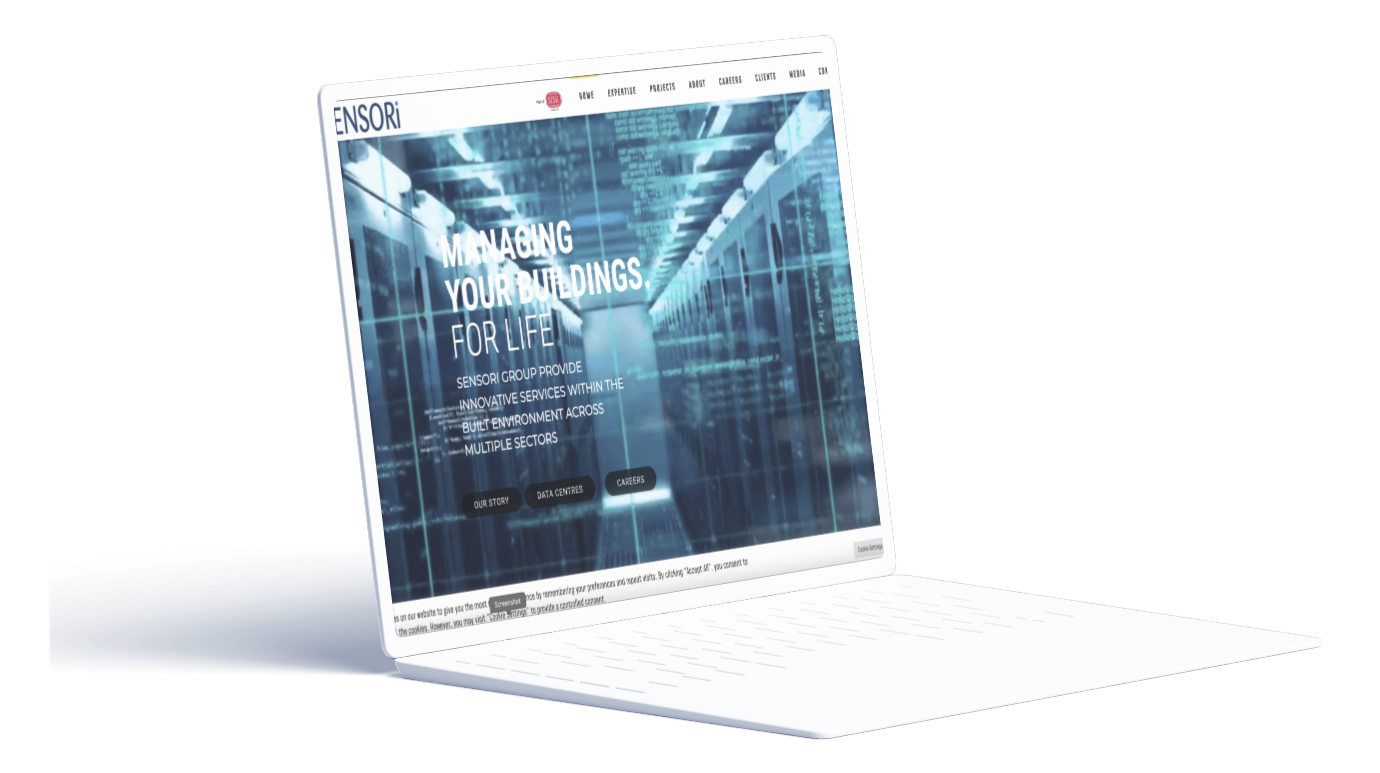
- Approachable and innovative: Sensori FM’s tone is more conversational and approachable compared to CBRE, focusing on innovation and modern solutions. They highlight being tech-driven and forward-thinking in facilities management.
- Customer-centric: Messaging consistently emphasizes client needs and benefits, positioning Sensori as a partner offering tailored solutions. They build trust by showcasing innovation and their ability to solve complex problems with modern solutions.
Information Architecture:
- Simplified navigation: The site is structured in a simple, user-friendly manner with service pages easily accessible via the main navigation bar. Unlike CBRE, information is presented upfront without requiring deep exploration.
- Lead generation emphasis: Prominent CTAs, including easy-to-find “Contact Us” buttons, push for user interaction and inquiries, making it easier for potential clients to take action.
- Efficient information delivery: Service details are concise but informative, with key points highlighted through icons and short paragraphs, making content digestible.
Savills Facilities Management
Web Design:
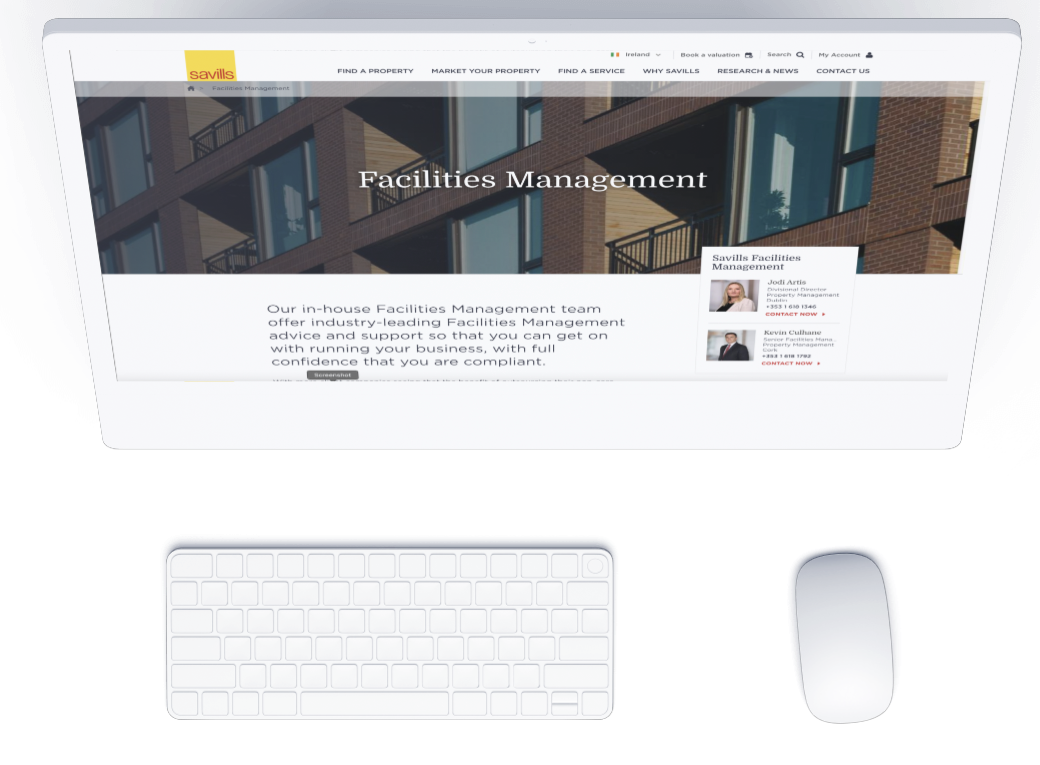
- Corporate and traditional design: The Savills site has a more traditional and formal layout, with a heavy focus on corporate professionalism. It’s clean but less modern compared to Sensori.
- Visual simplicity: It relies on minimal graphics and professional imagery. The emphasis is more on content than design elements or interactive features.
- Mobile compatibility: While mobile-responsive, the design feels static and less dynamic than competitors, giving it a slightly dated feel.
Tone & Messaging:
- Formal and authoritative: Similar to CBRE, Savills adopts a highly professional, formal tone. However, there’s less emphasis on innovation and more on tradition and reliability, emphasizing experience and consistency in delivering FM services.
- Trust and expertise: Messaging centers on Savills’ long-standing reputation and expertise in managing prestigious properties, appealing to established corporate clients who value experience over novelty.
Information Architecture:
- Well-structured content: Information is clearly structured, and services are laid out in a way that’s easy to access. The lack of deep layers of navigation makes it quicker to find relevant information.
- Service descriptions: Service details are more text-heavy than CBRE or Sensori. It’s rich in content but can feel overwhelming for users who prefer succinct summaries or visual aids.
- Limited interactivity: There’s less emphasis on engaging multimedia elements or interactive navigation, which makes the user experience feel more passive.
Commonalities Across the Competitors
Professional and Corporate Tone:
-
- All three sites adopt a formal tone to convey reliability and professionalism, appealing to high-end corporate clients.
- The focus on expertise, scale, and long-term client relationships is consistent across all sites.
Service Segmentation and Navigation:
-
- Each site divides their services into clear, easily navigable sections. However, CBRE and Sensori use more layers and categories, whereas Savills opts for a simpler structure.
- Service descriptions are prominently featured, though CBRE and Savills lean toward more text-heavy presentations, while Sensori balances text with visual elements.
Calls to Action:
- All sites use prominent CTAs like “Contact Us,” though Sensori’s is more aggressive in pushing users to interact quickly, while CBRE and Savills have a more measured approach.
- Lead generation is a key goal across all sites, but Sensori places stronger emphasis on guiding users toward action with clear buttons and interactive features.
Focus on Trust and Reliability:
- Trust-building is central to all three sites, whether through global experience (CBRE), long-standing reputation (Savills), or innovative solutions (Sensori). The messaging is client-focused, highlighting benefits and tailored services.
stakeholder feedback
around current acacia site
Amsterdam-based DJ/Producer van Pol exploded onto the international techno scene with his own take on minimal style, having previously released on MINUS, SCI+TEC, IDEAL AUDIO and REJECTED as well as his own FADE label. His dynamic approach to music has since enthralled listeners worldwide and sets the tone for performances this summer at Welcome to the Future Festival and Loveland. ‘Immediate’ opens the EP with a distant, yet emphatic bass, and a clamour of ominous horns, evoking a perilous, subterranean, time without end.
Feedback from Stakeholders
Better Analytics and Insights Needed:
“We want to better track user behavior and conversions on our site. Right now, we don’t have the level of detail we need to understand how users engage with our content.”
Customer Testimonials are Missing:
“We have a lot of great feedback from clients, but it’s not being showcased properly. Testimonials need to be more visible and play a key role in convincing new prospects to work with us.”
Lack of High-Profile Client Visibility:
“We work with some of the biggest companies in Ireland, but you wouldn’t know that from our website. We want these relationships to be much more prominent, build trust right away.”
Mobile Experience is Inadequate:
“Our site is not as user-friendly on mobile as it should be. Many of our clients and prospects are on the go, so we need a better mobile-first experience.”
Slow Lead Generation:
“We don’t have enough emphasis on capturing leads through the site. It’s too passive. We need to add forms, CTAs, and more aggressive lead generation tools.”
Outdated Visual Design:
“The current design is starting to look dated, especially compared to competitors. It doesn’t reflect the modern and innovative nature of our business anymore.
SEO Isn’t Working Hard Enough:
“We’re not ranking high enough in search results for key facilities management terms. We need a stronger SEO strategy to improve visibility and attract more organic traffic.”
Too Much Text / Overloaded Content:
“Some pages are cluttered with too much text, which feels overwhelming to visitors. We need to simplify our message and make the site more visually engaging.”
Hidden Services and Products:
“We feel like many of our services are buried too deep within the website, making it difficult for potential clients to find what they’re looking for quickly. We want our key offerings front and center.”
Why They Want to Change:
- Brand Refresh:
- “We need a site that reflects where we are now as a company—a leader in the facilities management space. The current site doesn’t convey the premium quality of our service offerings or our innovative approach.”
- Stay Competitive:
- “Our competitors have upped their game, and we need to do the same. If our website doesn’t look as modern or professional as theirs, we risk losing credibility with potential clients.”
- Better Client Engagement:
- “We’re looking to create more engaging client journeys, especially in the trust-building phase. Our current site doesn’t facilitate those deeper, more personalized interactions that longer sales cycles require.”
- Drive More Business:
- “Ultimately, we want to generate more leads through the website and convert visitors into customers. Our current site doesn’t do enough to support that goal—it’s more of a brochure than a sales tool.”
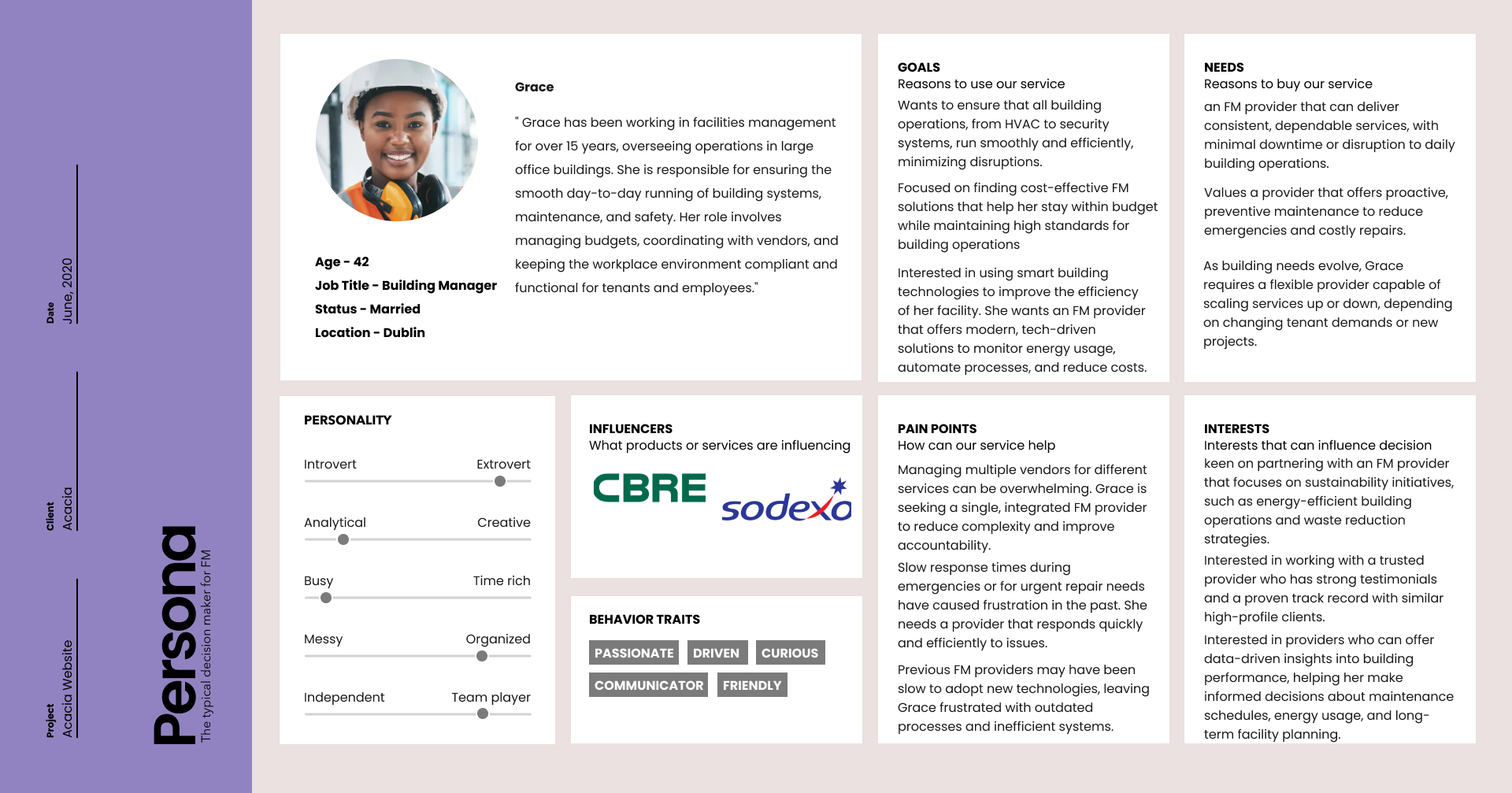
Buyer persona
building managers
Content creation
12 contributors and approval processes
As I began developing the content and designing the website, I quickly realized that securing text approval was the top priority. With up to 12 stakeholders involved in the review process, I knew that getting everyone aligned could be challenging—especially when it comes to marketing content, which can be difficult to start for some. To address this, I drafted the initial versions of the site’s pages and circulated them. This approach helped spark ideas and encouraged feedback, making it easier for stakeholders to engage in the process.
To streamline the management of nearly 50 web pages, I created a structured Excel document—something familiar to the team. Each line item represented a page, with clear responsibilities assigned for review. I also included direct links to Word documents stored in SharePoint, allowing stakeholders to easily edit the content from their computers or mobile devices.
This system worked exceptionally well. Within just three weeks, we had final approval on all content for the site, a major milestone in the project. WE HAD OUR CONTENT!
Website re-designs
built from the groud up

Visual & Structural Enhancements:
- Modernized Layout: The updated site adopts a cleaner, more contemporary design, with a well-balanced use of imagery, icons, and text. This gives the site a professional and polished appearance, making it more visually appealing and user-friendly.
- Consistent Branding: The site’s color scheme and design elements are aligned with Acacia’s branding, ensuring a consistent and recognizable look throughout. The orange and teal accents help create visual interest and aid navigation.
Improved Navigation:
- Sidebar Menus: The introduction of sidebars for key service categories, such as “Planned Preventative Maintenance,” simplifies navigation. This ensures users can easily find relevant information without having to search through multiple layers of the site.
- Icon-Based Navigation: The use of large, easy-to-understand icons for services like “Reactive Maintenance” and “Mobile Technicians” enhances accessibility and improves user engagement by making navigation more intuitive.
Client Showcases & Testimonials:
- Client Logos Display: The inclusion of high-profile client logos (e.g., Salesforce, Xerox, HSBC) on the homepage prominently showcases Acacia’s credibility and trustworthiness. This is an effective way to quickly establish trust with potential customers by displaying social proof.
- Client Retention Highlight: The statement on the 94% retention rate over 10 years reinforces Acacia’s reliability and long-term partnerships, appealing to potential clients seeking a proven provider.
Sustainability & Corporate Responsibility:
- Evergreen Initiative: The “Acacia Evergreen Initiative” page highlights Acacia’s commitment to sustainability and alignment with UN Sustainable Development Goals (SDGs). This section appeals to environmentally conscious clients and showcases Acacia’s leadership in sustainability efforts.
- SDG Alignment: By showcasing specific SDGs (e.g., gender equality, affordable and clean energy), the site positions Acacia as a forward-thinking company aligned with global best practices.
Focused Content & Call to Action:
- Key Benefits Highlighted: For services like “Planned Preventative Maintenance,” the site emphasizes specific benefits, such as a 26% increase in asset lifespan and a 32% reduction in reactive work orders. This data-driven approach makes a compelling case for the services offered.
- Calls to Action (CTAs): The site effectively uses clear CTAs (e.g., “Contact Us” and “View Online”) to guide users toward conversion points, encouraging interactions and inquiries.
Content Optimisation:
- Informative Copywriting: The content has been streamlined, making it easy to read and digest. Each service is clearly explained, with the process and benefits concisely outlined.
- Text and Visual Balance: The site balances text with visual elements like icons, percentages, and images to keep the user engaged and minimize information overload.
Mobile & Desktop Compatibility:
- Responsive Design: The layout and elements, including sidebar navigation and imagery, adapt well to different screen sizes, ensuring a consistent and optimal experience for both desktop and mobile users.
These improvements contribute to a more modern, user-friendly, and engaging experience, helping Acacia build trust with potential clients and emphasize its core services and values.